
Key Takeaways
- Turnovers include cleaning, inspection, restocking, presentation, and issue reporting.
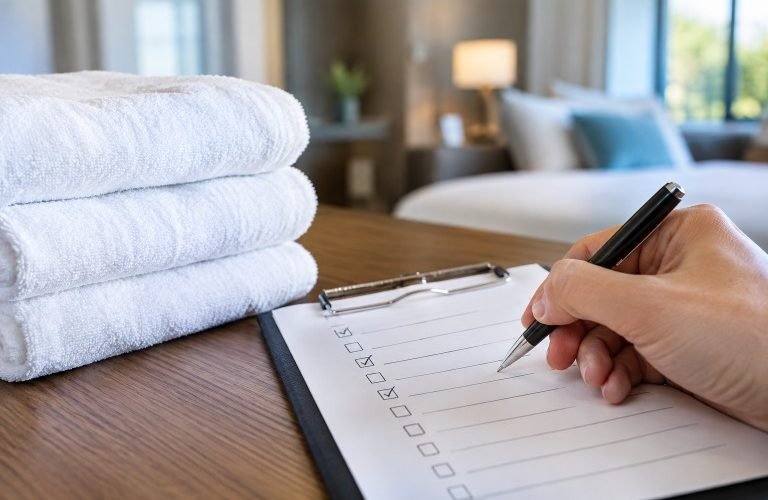
- A written checklist reduces reliance on memory during busy changeovers.
- Clear roles help cleaners, hosts, inspectors, and maintenance teams work efficiently.
- Photos and concise notes create a useful condition record before each arrival.
- Fresh linens, working amenities, and orderly rooms help the property feel ready.
A successful short-term rental turnover is not simply a fast clean between reservations. It is a repeatable process for cleaning, resetting, inspecting, restocking, and documenting a property before the next guest walks in. Whether work is coordinated in-house or through a vacation rental cleaning service, a clear standard helps everyone understand what “guest-ready” means.
The strongest turnover systems reduce avoidable surprises at check-in. An empty soap dispenser, overlooked food in the refrigerator, a missing remote, a loose handle, or a poorly made bed can affect a guest’s first impression. The goal is to leave the property clean, complete, safe, and presented as guests expect from the listing.
Why Turnovers Need More Than Basic Cleaning
Routine house cleaning usually focuses on maintaining an occupied home. A vacation rental turnover has a different finish line: an incoming guest may arrive only hours after the previous one leaves. That creates a fixed window for removing used linens, clearing personal items, cleaning high-touch surfaces, checking amenities, and resetting every room.
Cleaning alone is not enough. A home can look tidy yet feel unfinished if the lights have not been checked, towels are missing, furniture is out of place, or guest supplies are nearly gone. A turnover should combine operational checks with the visual details that make a stay feel intentional.
Build a Simple Turnover Timeline
Use the same sequence for every departure and arrival. A consistent order helps the team prioritize guest-facing work before less urgent tasks and makes it easier to see when a problem threatens the next check-in.
- Confirm checkout, cleaning, inspection, and arrival times.
- Review guest messages for reported damage, lost items, or maintenance concerns.
- Remove rubbish, used linens, and leftover food or belongings.
- Clean each room in a defined order.
- Restock agreed supplies and replace items that are damaged or missing.
- Complete a final walkthrough before access instructions are sent or check-in begins.
- Record photos and report anything that needs attention.
Create a Room-by-Room Cleaning Checklist
Broad instructions such as “clean the house” leave too much room for interpretation. Room-specific checklists make the expected result visible and help a new team member complete the same work as an experienced cleaner.
Entry and Living Areas
- Check the entry for clutter, dust, marks, and noticeable odors.
- Wipe handles, switches, remotes, and other high-touch surfaces.
- Vacuum floors, upholstery, beneath furniture, and between cushions as needed.
- Reset pillows, throws, furniture, decor, and guest information materials.
- Test essential lighting, heating, and cooling controls, as well as entertainment equipment.
Kitchen and Dining Areas
- Clean counters, sinks, faucets, appliance exteriors, and dining surfaces.
- Empty the refrigerator and remove food left by prior guests.
- Check dishes, glasses, cookware, and utensils for residue, chips, or breakage.
- Restock the kitchen essentials promised in the listing or house manual.
- Empty bins and fit clean liners.
Bedrooms and Bathrooms
- Replace used sheets, pillowcases, towels, and bath mats with clean items.
- Inspect mattresses, protectors, drawers, closets, and under-bed spaces.
- Clean mirrors, sinks, showers, tubs, toilets, and fixtures.
- Look closely for hair, water spots, stains, leaks, and loose fittings.
- Replenish toilet paper, hand soap, and any toiletries included for guests.
Use a Final Inspection Before Check-In
The final inspection should happen after cleaning is finished and before the next guest arrives. When possible, the person checking the property should approach it with fresh eyes. This step can catch a missed item, an appliance issue, a safety concern, or a presentation detail that blends into the cleaner’s work.
A practical short-term rental turnover inspection guide reinforces the value of checking the property after cleaning, including amenities, maintenance items, safety details, and staging. During the walkthrough, verify that keys or smart locks work, windows and doors are secured, and required safety equipment is present and unobstructed.
Set Standards for Cleanliness and Presentation
“Clean” describes the absence of visible dirt and debris. “Guest-ready” adds the finishing work that makes the home feel complete. Beds should be neatly made, bathroom surfaces should be dry and polished, supplies should look sufficient, and the property should resemble its listing photos.
Use a short guest-viewpoint test during the final walkthrough:
- What will a guest notice first when the door opens?
- Does the space smell fresh and neutral?
- Are beds smooth, clean, and free of visible marks or hair?
- Are bathroom fixtures, mirrors, and counters bright and dry?
- Does every room appear orderly and ready to use?
Manage Linens, Supplies, and Inventory
A spotless property can still generate complaints when basic supplies run short. Set minimum stock levels for items such as linens, towels, toilet paper, bin liners, soap, coffee supplies, batteries, and light bulbs. Keep a simple inventory list for each property, including where backup items are stored.
Professional turnover work often includes laundry coordination, inventory checks, damage documentation, and final quality control, not just surface cleaning. The responsibilities outlined in this short-term rental cleaning certification guide can help teams understand why a complete reset requires more than a basic cleaning routine.
Document Damage and Maintenance Problems
Reports are most useful when they are specific. Note what was found, where it was located, when it was discovered, and whether it needs immediate action. Add clear photos when practical, especially for stains, broken items, leaks, missing inventory, or guest-caused damage.
Use simple labels such as “urgent,” “before next stay,” and “monitor.” This gives the host or property manager a quick way to decide whether the issue can wait, requires a maintenance visit, or makes the property unsuitable for check-in.
Train the Team on One Shared Process
Consistency is easier when every cleaner receives the same room standards, supply list, checklist, and reference photos. Begin with a property walkthrough, demonstrate the desired result in each room, complete a supervised turnover, and review any missed details. Update the checklist when recurring issues appear.
Use Photos to Improve Consistency
Reference photos can show how beds should be made, where towels belong, how furniture should be positioned, and what a fully stocked shelf looks like. Take final-condition photos after the work is complete. Useful images are clear, focused on the condition of the space, and paired with brief notes when issues are found.
Common Turnover Problems to Avoid
- Relying on memory instead of a written checklist.
- Starting deep-cleaning tasks before urgent guest-facing areas are complete.
- Discovering low inventory on the day of check-in.
- Leaving damage or maintenance reporting responsibilities unclear.
- Using different standards across different cleaners.
- Skipping the final walkthrough because the property appears finished.
Frequently Asked Questions
How long should a short-term rental turnover take?
Timing depends on the property’s size, number of bedrooms and bathrooms, laundry arrangements, guest count, supply requirements, and the condition in which the previous guests left it. Plan enough time for a final inspection, not only for cleaning.
Should the cleaner also inspect the property?
Cleaners can report visible issues during their work. A separate final check can add quality control, although smaller operations may combine both roles if the checklist and reporting process are followed consistently.
How often should a deep clean be scheduled?
Deep-cleaning frequency depends on guest volume, property features, local conditions, and what routine inspections reveal. Keep deep-clean tasks separate from the standard turnover list so they can be scheduled without disrupting essential guest-ready work.
Make Every Turnover Repeatable
Reliable turnovers come from clear standards, defined responsibilities, and a process the whole team can follow. A practical checklist helps cleaners work with confidence, gives hosts earlier notice of problems, and helps every arriving guest find a home that feels clean, complete, and ready for their stay.
